New Beekeeper FAQs
If you are new to beekeeping or just thinking about getting started you will have lots of questions.

Image by Jennifer Lanham.
Beekeeping is a real committment and some people find that they simply don’t enjoy being so close to bees. We can usually offer a taster session with a beekeeper where you will put on a bee suit and gloves (which we will provide) and watch the beekeeper open a full-sized colony of bees. You will need to bring your own wellintons or other high sided boots. You do not have to be a member of the association to do this.
Here are some commonly asked questions.
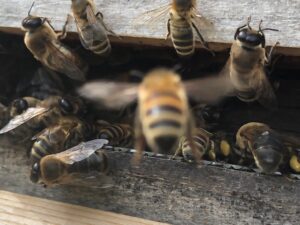
Image by Jennifer Lanham.
Q. What equipment (tools) will be needed?
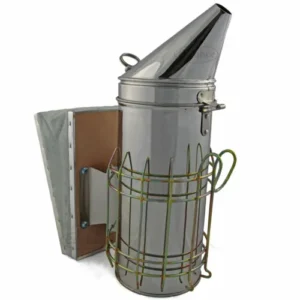
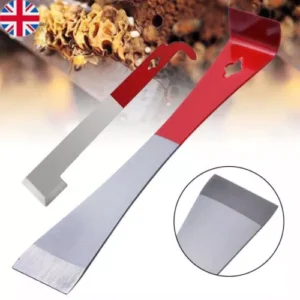
A. You will need a smoker and a hive tool. Expect to pay upwards of £25 for a decent smoker and under £10 for a hive tool. Many beekeepers light their smoker with a chef’s lighter. They do need frequent refilling so think about a chef’s refill.
Q. What clothing will I need to take up beekeeping?
A. The first thing every new beekeeper needs is a suit with a veil. This will protect you from most bee stings. You can buy just a jacket with veil but you will need thick trousers and a means of preventing bees creeping up the trouser legs. Bees always climb upwards so it is best to wear wellingtons or boots to stop them getting inside your clothing. Expect to pay around £100+ for a full suit.

Suits are available for adults in many sizes from XS, S, M, L, XL, 2XL, 3XL to 4XL.
You can get suits for kids too!
Q. What about my hands?

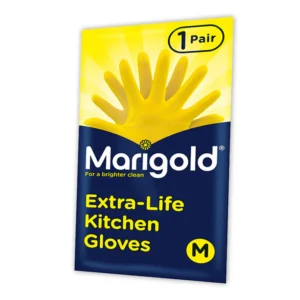
A. Many on-line shops will include a free pair of leather type gloves but these are not ideal because they are too thick, the bees can smell the animal product and they are difficult to wash. A better solution is latex gauntlet gloves. Bees may be able to sting through these but some people wear a second thinner pair underneath.
A low cost solution are Marigold gloves. Make sure you buy the correct size for your hands; too tight and they are difficult to get on and off, too loose and bees may get inside.
It’s hard to beat supermarket prices and they are not expensive.
Attaching the veil and doing up the zips on an all in one bee suit.

Step 1
Step 2
Step 1
Let’s begin with attaching the hood or veil. This is made to be detachable so that it can be washed separately by hand. The remainder of your suit can go in the washing machine.
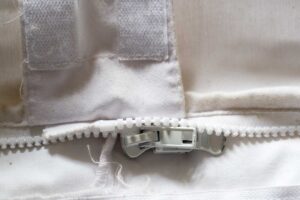
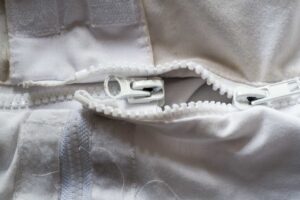
You will notice that your veil has a double ended zip.
At one end, there is a long solid terminating block. At the other there is a short block.
Step 2
Ensure that both zip handles are together at the long end.
Ensure that the Velcro cover is up out of the way of the zip ends.
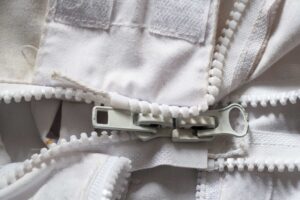
On your suit is another zip with a matching long end block.
Step 3

Step 4

Step 5
Step 3
Feed this in to both zip pulls and make sure long suit zip is through both pulls. Draw the first (Left) zip pull around the back of the suit to about three quarters of the way round.
Now open up the other zip pull to about one quarter of the way round. You should now have enough room to get the hood or veil over your head once the suit is on.
Step 4
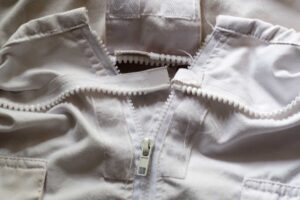
Start to draw the first zip pull around the back of the suit to about three quarters of the way round.
Note: The images show what it looks like to an onlooker. You will soon be weqaring your suit and will not be able to see unless you have a mirror.
Step 5
Now open up the other zip pull to about one quarter of the way round.
You should now have enough room to get the hood or veil over your head once the suit is on. If not, move both zip pulls further back.
You can now start to put your suit on.
Step 6
Step 6
Ensure the long front zip is all the way down to the crotch.
Remove any footwear and step into the suit and make sure that your feet are encircled by the elastic loops at the end of each leg. These will prevent the suit riding up and exposing your ankles. Put your arms through the sleeves.
Step 7
Step 8
Step 7
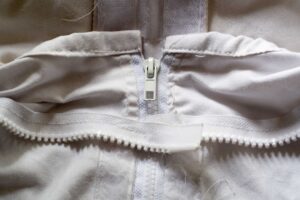
Do up the front zip as far as it will go. This is well beyond the veil zip. If possible, get a friend to check for you or use a mirror.
As you progress, keep checking that all the zips are done up properly.
Step 8
Your hood or veil is probably hanging down behind your back. It can help to bend forwards so it flips over and you can grab it.
The half space you left earlier should allow you to place your head inside the hood or veil. If not, open both zips a little more or ask a friend to help.
Step 9
Step 9
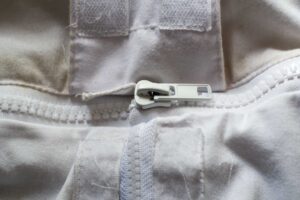
It is important to zip up the zips in the correct order.
With your left hand, reach round and pull the handle to your throat. It should go beyond the half way position.
With your right hand, reach round and pull the remaining zip to your throat. It should reach to the middle of the Velcro cover and completely cover the first zip end.

Step 10
Step 10
Finally, lower the Velcro cover down and smooth the hood or veil hooks over the matching suit loops.
You are now safely suited up.
Note: Some veils have a supporting bar that keeps the veil spread out. Bees can sting through the veil mesh so wear a wide brimmed hat to keep the veil away from your face and ears.
Nice to have items.
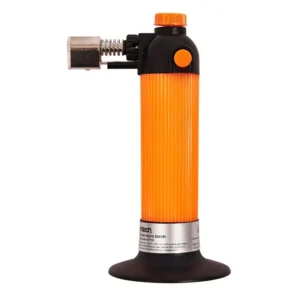 A chef’s lighter. Cost £10+ but it certainly makes lighting your smoker easier.
There is always one more thing… These lighters use a lot more fuel so don’t forget to buy a butane refill too.
Q. What about the bees? They need somewhere to live.
A. There are many types of beehive available and they are made of different materials. not just wood. Many experienced beekeepers make their own.
For the new UK beekeeper, it is best to buy the most readily available and standard size possible. These are usually available as “flat packed” so will need assembly. This is very simple and the only tools you will need are a hammer and a tape measure (to make sure everything is square). For extra strength and protection, you may wish to glue wooden hives parts together. Each box simply sits on top of the lower part. The bees will glue them together with propolis.
A popular choice is:
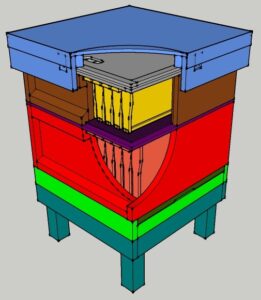
The British Standard National Using 14×12 Brood Box
Other items to consider are a strap to keep the boxes together. Horses and badgers may try and knock a hive over.
A heavy brick to sit on the roof to stop it being lifted off in high winds.
From the top down this consist of:
- a roof (usually metal and wood)
- a crown board – provides insulation, ventillation and a space for feeding
- a super – this is where the honey crop is stored
- a queen excluder – this prevents the queen laying eggs in the honey compartment
- a brood box – where the queen lays her eggs and the brood in incubated
- a mesh floor – this provides essential ventillation and allows varroa mites to drop through
- a stand – to keep the hive off the ground
Colour key
Blue – roof
Grey – crown board
Brown – super
Red – brood box
Light green – floor
Dark green – stand
A National Beekeeping hive starter kit in cedar wood will cost in the region of £250 and may include two supers and all of the components in the diagram above except the stand and the frames.
This system ensures there is bee space below each box. Other systems may use top bee space. The two cannot be mixed.
You will also need to add brood frames, super frames and wax foundation. There are choices here. Brood frames can be self spacing (Hoffman style) or you can add castellations inside the brood chamber to ensure the correct bee space.
Beekeepers use often old pallets, concrete blocks or make their own stands using scrap timber.
Consider the environment and reuse where possible. Try exploring the “Trash Nothing” website for free items.
Q. What is the cost of training?
A. Winter Lectures are delivered from January to mid March exploring the following topics:
- Introduction to beekeeping
- Products of the hive
- Inspecting the colony and the beekeeping year
- Bee health, Diseases & Hygiene
- Foraging
- Swarming
- Culminating in a practical day at Uckington Village Hall.
The cost of the six evening lectures is £70.
Q. How do I get more training after that?
A. The Hands-on Training (known in the club as H-oT) is for beginners and limited to a maximum of 10 people on each year’s course. The course runs over 2 years and includes tuition from experienced beekeepers each week (from April through to September) at our branch apiary.
The cost is £170 for the 2 year course. This includes the tuition and rental of club equipment (a hive and all its start-up components) and the nucleus of bees. At the end of the course the bees are yours to take away.